
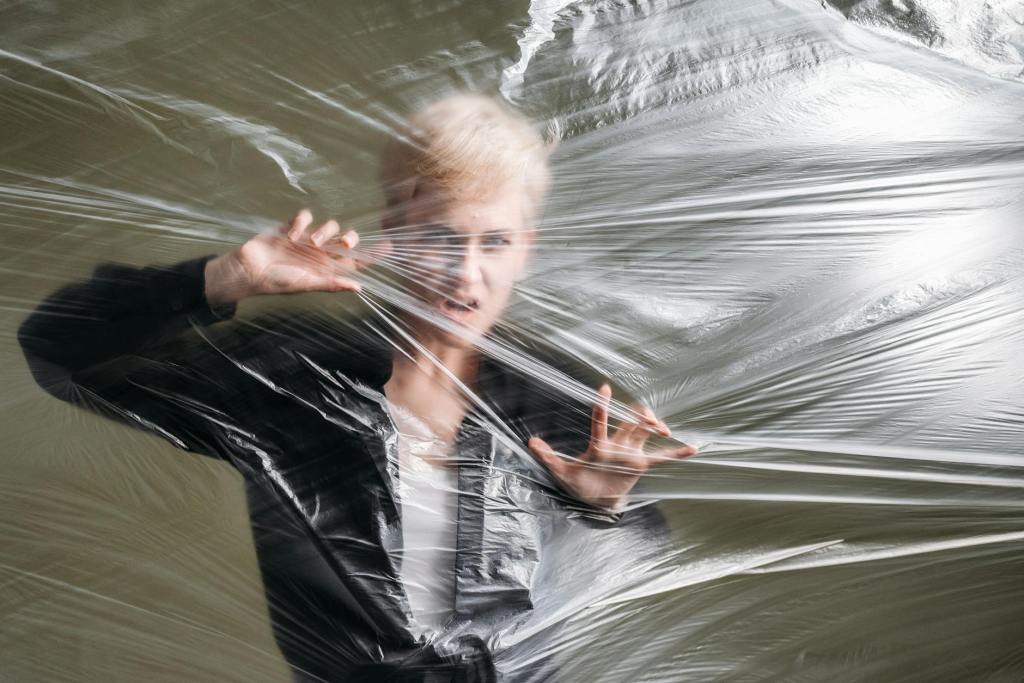
It’s hard recovering from a psychotic episode. It is essentially a total shipwreck of the mind, one that leaves you scrambling for whatever shore you can find, if there is one, in which case you flounder about in the ocean of your own subconscious for a while until you are hopefully rescued. To lose one’s mental faculties instills a terror indescribable to anyone who has not experienced it, but one that we all instinctively know given the way the sane cringe from the insane, as though it were an infectious disease they could catch.
Perhaps the worst aspect is being treated and viewed differently by the people around you, even those you’ve known for a very long time. You get used to being asked if you’ve taken your meds by loved ones and whether or not you’ve been thinking of hurting yourself or anyone else by medical staff. These questions abate over time as those in your life become more certain that you’re stable, but you are painfully aware that some level of trust has been broken between yourself and those that surround you, by no fault of your own. And it’s not your fault, but it’s certainly your problem now.
This effect is amplified if a psychotic episode was particularly severe, as mine was. If mental illness is really all caused by trauma and a psychotic episode is the explosive manifestation of that trauma’s damage, then the people who have to deal with you in that state of mind can wind up suffering from a secondary sort of trauma. They see someone they care about in a state of mind that their own brain is screaming in alarm at them about, depending on what is happening. The traumatized brain becomes hyper-sensitive to the same kinds of stimulus that was present at the time the trauma occurred, so now my husband is triggered by my doing benign things like sitting and listening to music because that was something I did to excess while I was psychotic.
Another troublesome aspect for me has been having to accept that I just don’t see the world the same way anymore, which means I don’t see it the same way anyone else does anymore, either. This doesn’t mean I’m ‘crazy’, it just means I have a different perspective now, one that others don’t always understand. As such, I’ve learned to be careful who I talk to about what if I don’t want to be looked at with that unmistakable, telltale, and soul-crushing facial expression that says, “this person is insane and I can’t wait to stop talking to them.” I’m not talking about alien abductions or anything particularly wacky, but since I’m a mystic and a philosopher, I think about the world a lot and in ways that most others don’t, even before my episodes, and so there are many in our world who just can’t relate to me, even less so now.
The more positive flip side of this issue is that there is a growing population of people just like myself who have had severe mental episodes that were also deeply profound in many ways and felt more like “awakenings”. Most of us have gone through a very similar process of breaking down, going through a ‘dark night of the soul’, followed by a transformation into a new ‘self’ that is similar to the old person, and yet very different. We find our solace in the collective unconscious of Carl Jung, in chakras and the kundalini, in yoga and meditation, in shamanism and spirituality, and in music, art, and dancing. Unsurprisingly, these are some of the things that current trauma research says are best at healing the nervous system damage that trauma causes. Science is beginning to brush up against things it formerly dismissed as ‘New Age’.
Other things I have had to deal with include the psychic divisions implied by the ‘schizo’ part of my schizoaffective disorder. People often mistakenly think schizophrenic people have so-called ‘split personalities’, but that is an entirely different psychological issue. The ‘splits’ a schizophrenic has to deal with are internal issues of identity and ego, of self and other, of individual and world, issues that effect the very perception of reality, usually driven by the psyche’s attempts to deal with some kind of trauma that itself engenders a split between the person’s core and the part of their psyche that was wounded. At least, that has been so in my case, as has been the reality that for people like myself, that trauma may not even be something remembered by the conscious mind.
I deal with these internal ‘splits’ with a great deal of logical breakdown, as though they were puzzles that need solving. In neurological terms, a psychic division represents a neural pathway that needs healing and perhaps rerouting. My schizoaffective disorder gives me the ability to visualize problems like flow and Gantt charts inside my head, showing me where information flow hits logical dead-ends and where it needs a step to move forward towards resolution of the split. Sometimes this involves moving from both ends of the problem towards the middle until I find the connecting point that allows for healthier information flow, or healing the division. These moments are like little explosions in my head breaking up concrete dams that have held back the flow of thoughts and feelings within my psyche. I can almost feel my neurons buzzing with fresh activity and rerouting themselves.
This work would be impossible without the somatically-based trauma therapy work I have been simultaneously doing both in session and on my own at home. Indeed, focusing on both body and mind at once seems to be the only successful path to healing I have found so far, a mindset growing in popularity due to its inherent holistic wisdom where Western medicine fails. As the title of a leading trauma book says, ‘The Body Keeps the Score’, and just as our brains store conscious memories, our bodies often store unconscious ones, and only by dislodging the unconscious memories have I been able to rationally pick at the conscious ones. The two processes go hand in hand.
A third process in this work I’ve been doing has been based in shamanism. Shamanism acknowledges mental trauma just like psychiatry does, but instead of describing it in terms of neurological processes, it is described in terms of soul processes. Trauma literally cleaves off the part of the soul damaged by the incident such that, in order for healing to occur, that cleaved-off part must be retrieved and sometimes healed before it can be put back. Usually this is done by another person, the shaman, but it is possible to do on one’s own, as I have been doing. I imagine this has only been possible because of the religious, philosophical, and spiritual knowledge that I had long before I lost my mind. Even that event can be described in shamanic terms, in the concept of the ‘shamanic dismemberment’, during which a person’s totem animal literally rips them to shreds, which is followed by a spiritual healing. This is precisely how my ‘breakdowns’ felt to me, like I was being broken down in order to be made whole again.
This is not easy work, either the logic puzzles or the somatic soul-digging or the shamanic healing. In fact, the somatic work is often quite painful physically, though I have learned firsthand how emotions are stored as physical pain when I do something physically that induces emotional tears, at which point my physical pain almost completely disappears. I am crying in pain, but not physical pain anymore: that’s just how my overburdened psyche made it manifest through the mind-body. These are almost always uncried tears: that is, something I should have cried about in the moment but was unable to for whatever reason. Or perhaps I did but my pain was unacknowledged and so sat there, waiting to be processed, sometimes for decades.
While plainly having this kind of mental issue comes with its problems, it has also come with its gifts. I feel as though the very same force that fractured my mind to the point of needing to be pieced back together, also gave me the tools to do so. I also feel that my post-shattering repaired Self is much better than past broken-and-cracked Me, who could be a really terrible person sometimes. I have essentially had a psychic overhaul, with some parts repaired and some parts replaced and a few upgrades added, with the result being a more robust system.
It’s been over two years since my last episode and subsequent hospitalization, which puts me squarely in “largely recovered” territory insofar as not having another episode goes. In reality, I have a great deal more healing to do, something my psychiatrist cannot help with: that arena belongs to myself and my therapist. I rest a lot, and read and write, two things that are as water when very thirsty to me. I also paint, something new that came into my life after my first episode three years ago. I’ve made some 70 or so paintings in the last two years or so, each one of them symbolically representative of some aspect of my psychic or spiritual life, though to me there is often no difference between the two.
I now try to see myself like one of those broken teacups that is having the Japanese art of kintsugi applied to it, where the cracks are repaired with gold, thereby highlighting them and turning them into something beautiful. The cup is transformed into something more than it was before, though still fragile and therefore to be treated with care and reverence. I am still working on those last bits via something of an internal “tea ceremony” by which I’m learning to be still and accepting of myself. Like the tea ceremony, once I have all the steps right, my cup will be ready to accept the tea, and I will be happy to drink it.



 The Bipolar Bodhisattva
Leave a comment