I ended my year with one final book: Wild Mind, Wild Earth by David Hinton. It is an argument that in order to save Planet Earth from the ongoing Sixth Extinction, it must be returned to a state of wildness, and in order to do that, we humans must ourselves return to a state of wildness that we have long forgotten. This state of wildness is represented by the life philosophy of Paleolithic peoples which lives on in Taoist/Ch’an (Zen) modes of thinking and viewing the world.
Basically, our current problem is that, as humans, we view ourselves as being outside the natural world, not a part of it, and therefore as being its dominators. In doing so, we do great harm to the natural world as well as ourselves, because whether we’re aware of it or not, we really are part of that natural world. In harming it, we harm ourselves. This perception of separation is the result of a number of factors, including the advent of agrarian cultures in the Neolithic era, the advent of written language, the advent of patriarchal dominance over what was previously a matriarchal way of living, and the Greek-Christian philosophical separation between humans and the Cosmos, which is false.
While those factors long ago may have conferred greater survival advantages to our species, now they do not. Now they are backfiring in our faces, and if we do not change or outright abandon these separatist ways, our entire species stands a good chance of being one of the ones that dies in this Sixth Extinction. As the author points out, this Extinction is serving as a great teacher of very harsh lessons, most notably that we are not separate from the natural world, nor do we ultimately control it. The question seems to be whether enough of us will wake up collectively in time to recognize our place in the scheme of things and work to re-engage with Nature harmoniously in the name of our own survival.
Mr. Hinton makes no bones on several occasions that it may indeed be too late to really do anything about the Sixth Extinction. That there may simply be too many changes of too large a magnitude that need to happen that our species is not collectively capable of. However, if there is any hope at all of this happening, it will come by embracing the Sixth Extinction and its lessons, not by denying it. It is a biological fact of the previous five mass extinctions on this planet along with the lesser ones that each extinction results in a greater complexity of life from the survivors, and this one will be no different. The dinosaurs live on today as the birds, which over the last 65 million years have evolved into a symphonic rainbow of life that covers the globe and nearly every ecological niche.
Will it be the same for humans?
The author points out that Nature has methods of dealing with species that get out of control in the environment, and we are not immune to these forces. I do not find it coincidental that the COVID virus seems to target those with philosophical viewpoints that are separatist and combative in nature. Those who think the natural world is theirs to dominate, and so are ignorant of the ways in which it dominates them. Perhaps this is Nature’s way of fighting those who seek to destroy Her.
Human beings, like every other living thing on the planet, are the hardy survivors of five mass extinctions. According to the Netflix show Life on Our Planet, everything alive today constitutes just 1% of all life that has ever lived. Most mass extinctions reduce the living population by 70-95%. Will we be part of the percent that remains? If so, how many of us, and which ones? I refuse to believe that natural selection would favor the attitudes of those who seem to seek to destroy everything that comes across their path. The question seems to be whether or not enough awakened individuals will survive the destroyers before Nature Herself takes them out.
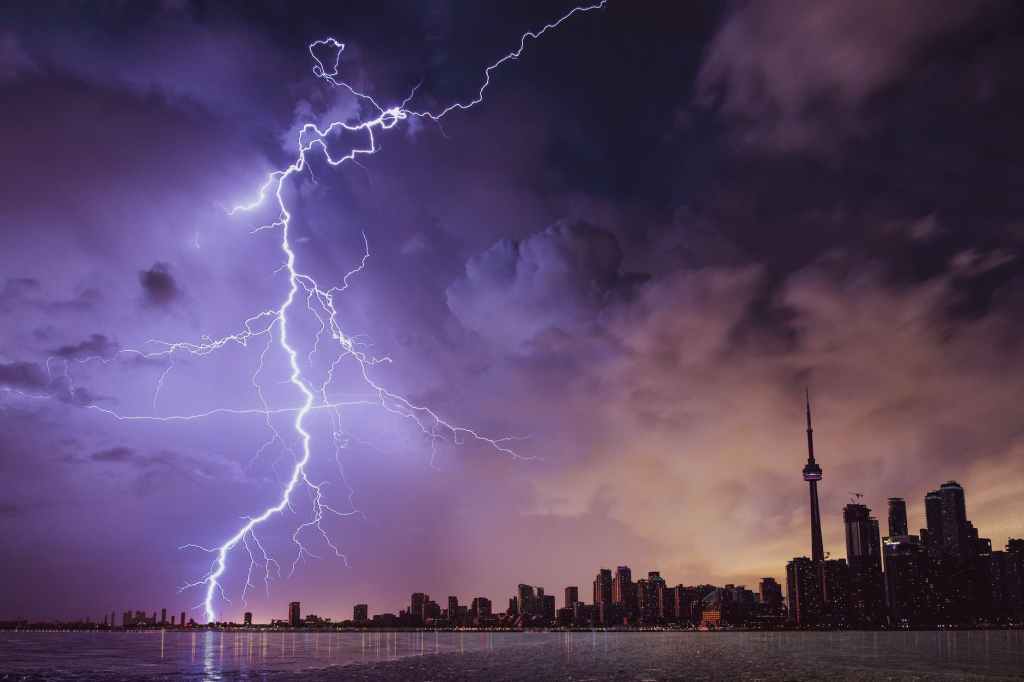
For those of us who seek to survive the literal oncoming storm and everything that will come with it, returning to the mindset that we are one and unified with our environment is the only way to ensure that survival. We must relearn how to live in harmony with the world around us and not see ourselves as separate from it, nor it as something that needs to be controlled and dominated. We are not separate from the world: would we ourselves want to be controlled and dominated? We must expand the Golden Rule to say “do unto the entire World as you would have done unto you”.
We do not need to abandon electricity and indoor plumbing in order to live as one with the Earth. We have the resources and technology right now to fulfill every single human being’s basic needs according to modern standards and still make the necessary changes to live in unity with our world and stop what’s happening. What’s needed is a shift in mindset away from the false separation between humans and the natural world and away from patriarchal dominance buttressed by capitalism. Seeing ourselves as one with the world would enable us to see ourselves as one with each other, and in doing so we would stop feeling the need to dominate and judge each other as being “less worthy”. Resources would be distributed according to need, not moral worthiness.
I found the book simultaneously disheartening, yet comforting. Disheartening because it seems like such a daunting task to effect the kind of paradigm change the author is suggesting. That’s a big ask of a society that lives its entire life, both individually and collectively, in a manner completely antithetical to that which is proposed and clings to that manner of living with egotistic verve. And yet we are creatures of biology as well as psychology, and our instinct to survive should save at least some of us. That paradigm shift is already occurring and has been occurring for some time: it’s just agonizing to watch the slow pace of change, especially when there are forces actively working against that change.
However, “the arc of the moral Universe is long, but it bends towards justice”, as Unitarian minister Theodore Parker said, to paraphrase. The author’s proposition of the Sixth Extinction as something entirely normal and natural that is to be expected from the course of human evolution does have an element of comfort to it because of that moral arc and because it is a physical reality of the Universe that matter outweighs antimatter. Yet we still hold our future in our hands: how bad it gets is entirely up to us. Have we hit bottom yet, like an alcoholic? Or will we collectively be one of those drunks that never find a bottom, who just keep on diving until they drown?
We are the sole remaining hominid species on the planet, having absorbed or beaten out all of the others over the last 3 million years. Perhaps it is not supposed to be this way. Perhaps we are supposed to live as different species attuned to different environments. Will our population reduce such that we no longer interact as globally as we do now? I believe the human species is in the midst of evolving, of culling those collective traits that do not contribute to our survival. It is a harsh way of viewing things, but it is the impartial Cosmic viewpoint of Taoism/Ch’an. What we look like as a species when the Extinction is over, if there is anything to see, is entirely up to us.
 The Bipolar Bodhisattva
Leave a comment