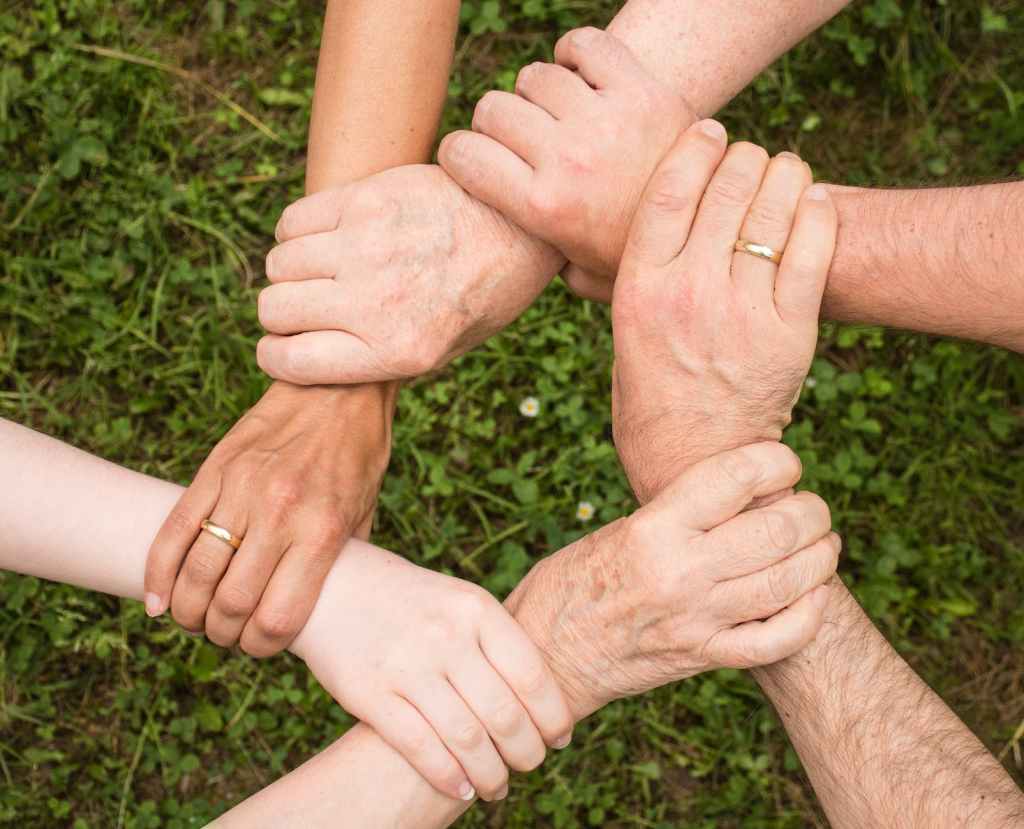
I already spend an inordinate amount of time thinking about the world’s problems and how to solve them. However, I was very recently afforded an opportunity to reflect on these issues more closely at hand as our area of Oregon was hammered by an ice storm over the weekend. The freezing and fracturing ice seemed reflective of our greater society’s frozen and fractured state of being, which I saw manifesting in a variety of ways as the storm unfolded.
I was already of the opinion that an eroding of our basic community structures over the decades has probably been the greatest contributor to what is now a greatly polarized society over virtually ever issue. An emphasis on independent individuality has meant a great reduction in community cooperation. This opinion was reinforced as I kept track of the local community online via its posts on Reddit. One poster was part of the electrical crews struggling to restore power even amidst continuing frozen precipitation and crashing trees, and he was apoplectic over some people’s incredible selfishness, entitlement, and complete and total inability to understand that they were not the center of the world.
This sense of entitled individuality drove a lot of bad behavior during the storm. People engaged in activities that not only put their own lives at risk, but also the lives of those around them. A lack of power meant that traffic signals weren’t working, and once roads were clear enough to drive, navigating the intersections was taking your life into your own hands because people no longer know what to do in that scenario. It was every person for themselves.
This is anti-communitarian behavior. [I like ‘communitarian’ better than ‘communist’ because, regrettably, the latter word has picked up so many negative connotations. Quite frankly, communism is an outstanding way to run a society as long as you can keep the corruption out of the system. Unfortunately, we haven’t seen any working examples of that on the planet yet.] Individuals living and functioning within a community who are aware of and keep their fellow community members in mind can handle things like 4-way uncontrolled intersections because they’re not just thinking of themselves.
This is the biggest difference between the two largest cultural factions in our society at the moment: those who are concerned for the well-being of the group and everyone within it, and those who are only concerned for their own individual well-being, and perhaps their closest friends and family. One group is inclusive and communitarian in nature, while the other is exclusive and individual in nature. Unfortunately, one is the Path of Life, and one is the Path of Death, quite literally.
As social animals, humans prosper the most when cooperating in groups, not when competing as individuals, although healthy competition between individuals within a group can make the group stronger. What we’re seeing today is very unhealthy competition, the kind that knocks people down as enemies instead of inspiring betterment. A lot of that time I spend thinking about the world’s problems is spent thinking about how to inspire cooperation between people on multiple levels of life while chipping away at the petty competitions that keep us falsely and dangerously separated.
It was clear to me as the ice storm raged on, and after the thaw when we could all emerge cautiously from our homes, how stronger community connections would have made the experience easier and safer for all of us. I live in a relatively recently built neighborhood (within the last 20 years) where the houses are very close together with very small yards. Yet despite this close proximity to one another, there isn’t much neighborly interaction, a trend I’ve noticed from the last two to three decades. As capitalist forces have altered the face of our neighborhoods and who lives in them, so have the community networks that once existed within those neighborhoods been destroyed and replaced by islands of individuality that rarely communicate. I’ve lived here nearly two years and only have the phone number of one neighbor.
As such, there was no way for us to support one another before, during, or after the storm. The twin cities were in chaos the day the storm was supposed to hit because it was also a mid-month payday, so everyone was out (again, for themselves) to do their shopping before they couldn’t. Afterwards, I couldn’t help but think about how if, as individuals, people banded together by block or apartment building and assigned specific tasks to be done on behalf of everyone as far as feasible. This would reduce how much time each person had to be out running preparatory errands while ensuring everyone’s needs were met and reducing public chaos.
I keep envisioning community as existing in interconnected and stacking layers, beginning with those closest to you, both physically and virtually. Your family is a community, your neighbors are a community, your church or your gardening group is a community, your friends are a community. Each block or building floor we live in could potentially be a community where people get to know one another personally and can offer their skills and talents to one another. Those blocks and building floors would inevitably turn out to each carry their own collective skills and talents, and in turn create even larger communities of whole neighborhoods and apartments/condos with their own collective talents and skills.
I see annual or seasonal neighborhood celebrations where everyone as individuals and as communities showcases those skills and talents to one another. Competitions are held, but not as a way to show superiority, but to motivate and inspire others. In day to day life, people talk to one another and help each other out, making each other’s lives easier, safer, and more comfortable on many levels. They form tight-knit, cooperative groups that themselves cooperate with the other cooperative neighborhood groups around them.
Notice that word “cooperate”, a notion that seems to have been lost or forgotten in our society, even in progressive circles. The egotistic notion of independent individuality has infected all of us like a psychic virus, preventing us from seeing others’ perspectives and cooperating with each other the way we’re supposed to in order to ensure our survival. Unlearning egotistic individuality and relearning how to cooperate with one another is the only way our species will survive the Sixth Extinction.
It’s not our fault we’re like this now. Powerful forces with a vested interest in destroying community and progressive ideas have been at work for decades trying to instill this sense of solitary individuality into the general population for the purpose of doing their nefarious work without being noticed. Now that it’s obvious what they’re doing, instead of working together against capitalism and fascism, we’re fighting amongst ourselves. Which is what they wanted all along: it makes them money and allows them to keep doing what they’re doing.
Which is why I feel so strongly that reforging community is the best defense against Christofascist forces that seek to tear us apart and keep us that way. We need to get to know our neighbors and learn how to settle small differences amicably as individuals with negotiation and compromise. Only then will we be able to settle larger collective differences amicably.
I remember when it wasn’t uncommon for a newly arrived neighbor to have at least one established resident bring food to them as they were moving in, as a welcoming and nurturing gesture from the neighborhood in whatever form it took. It was a friendly ice breaker, kept the person or family from having to worry about dinner on an already stressful day, which is an incredible kindness, and gave them a later opportunity to strike up an acquaintance when they returned the clean dish. I’m not sure how such an action would be seen today, if it still ever happens.
It’s neighborly gestures like this that form the bedrock of community and that need to be revived if we are to reform our communities and not just be collections of households living independently amidst one another. Our capitalist society has engineered everything so that we are each expected to be completely self-sufficient and independent, providing everything for ourselves (or paying a contractor to do it) that was once provided on a community basis. This ensured everyone was provided for while reducing the overall workload because people were helping one another.
As a society, we don’t help one another anymore because we don’t trust one another anymore, and that’s a collective state that has been imposed on us by those same Christofascist and capitalist forces that seek to dominate the vast majority of humanity in the name of profit, religion, racism, and sexism. We will have to intellectually overcome this state of affairs logically so that our collective decision-making is not so emotionally driven, something that both sides of the Argument are frequently guilty of. It’s natural, we’re human, and humans are emotional creatures no matter how much we want to think of ourselves as being rational.
Ideally, communities would grow slowly, but in exponentially rising waves. It would start with neighbors getting to know one another and engaging in the simple act of swapping phone numbers and email addresses. This would enable small community networking outside the realm of places like Facebook, which has monopolized and perverted the notion of community while simultaneously destroying it, very deliberately. Hopefully as people got to know one another, various illusions would be shattered, and we would not see ourselves as so divided.
This would set the stage for an even greater level of community building, one that can have an effect on how local government operates, which is where grassroots political action begins. This is also where “be the change we wish to see in the world” comes into play, as cooperative groups come together to negotiate and compromise and have a chance to model that cooperative behavior in the face of potential conflict. I believe strongly that modeling good behavior is the best way to effect change in society, not by directly telling people that they’re doing something wrong. No one wants to hear that. They simply need to be shown in no uncertain terms that intolerance won’t be tolerated, and that’s not hypocritical. Intolerance breaks the social contract, and you can’t expect to be covered by the protections of the social contract if you’re going to deliberately break its rules.
Done in enough places, this is the sort of thing that can turn into a groundswell of change. It doesn’t actually take that much to start social and cultural momentum, and Christofascists know this, which is why they’ve worked so hard to destroy community. By keeping people separated, even if that separation was based on lies, they knew they could not only prevent people from even noticing what they were doing, they could prevent anyone from doing anything about it once it was noticed, which is exactly what has happened.
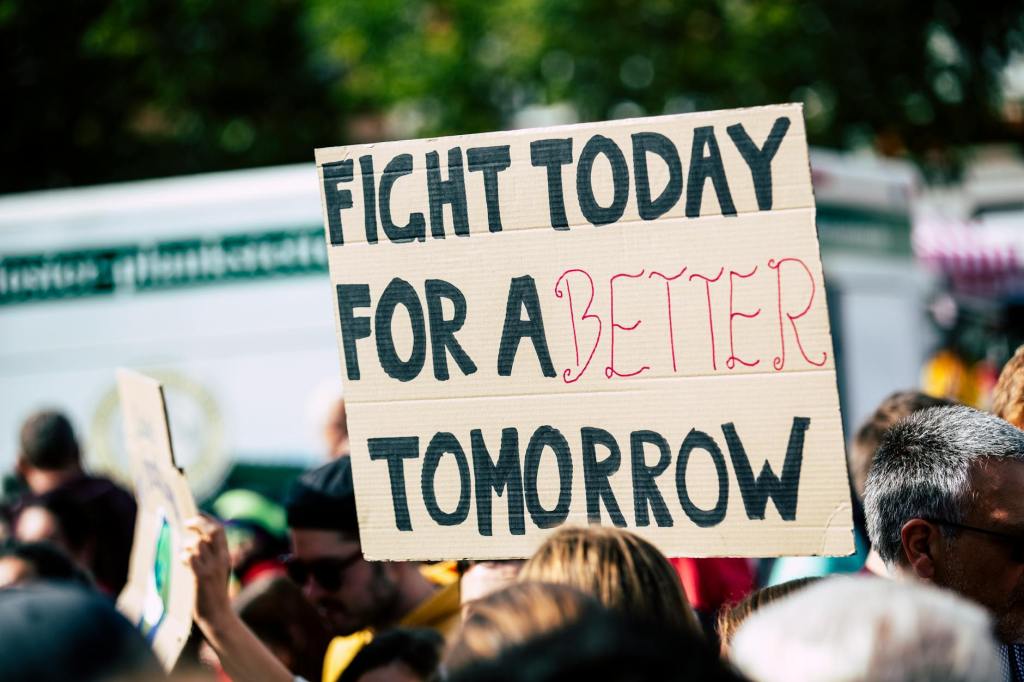
If regular everyday people stand any chance of defeating the forces that seek to suppress, oppress, and destroy them, they will have to set aside their fear and anger from the last eight years, mend community bridges that were burned, and learn to work together again. We knew how once, but we were made to forget, our memories of cooperation replaced with false images of threatening danger. Beginning with our neighbors, we need to rebuild the social networks that once existed in our lives before they were crushed by capitalism, Christofascists, and social media. These networks will form a strong underpinning for our greater society and enable us to effect even larger changes that ensure happiness and security for everyone.




 The Bipolar Bodhisattva
Leave a comment