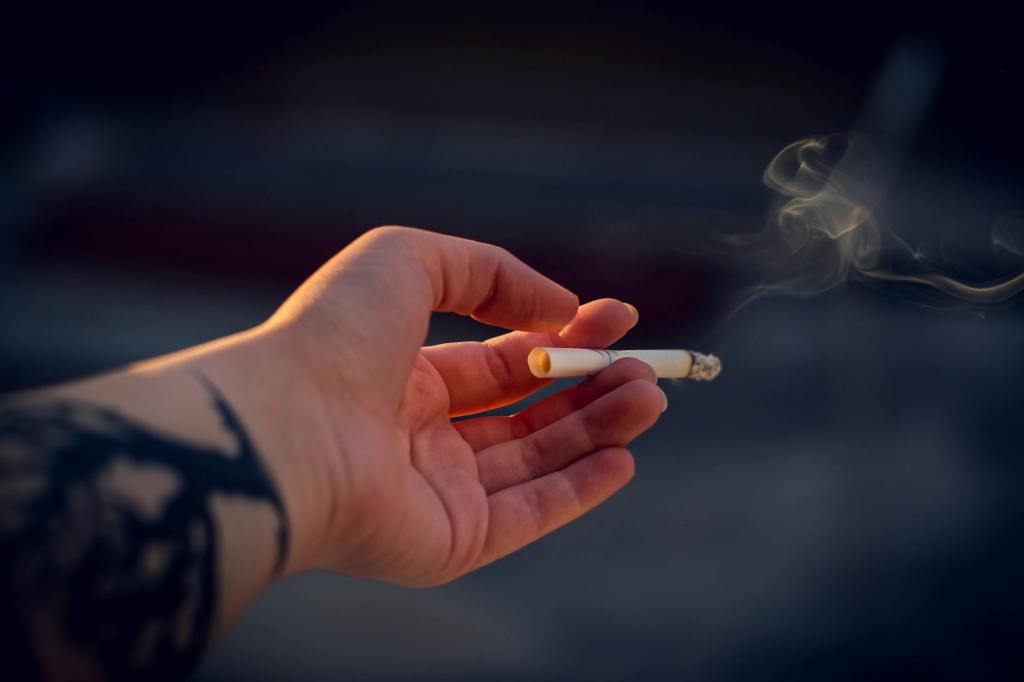
I wrote this late last November as I was recovering from my first illness in a long time.
Something remarkable happened to me over the last week or so. About a week ago, I came down with a cold, or perhaps a mild flu. I hadn’t been sick in so long that I couldn’t actually remember the last time it happened. I quickly remembered the pattern of a respiratory illness, though: a funny tickle in the back of my sinuses, followed by a sore throat that sets in overnight and is mostly gone by morning. Then the congestion sets in, first in the sinuses and then in the lungs a few days later.
In the past, this last part often lasted for weeks because the cold would become bronchitis. This was because I’d been exposed to daily tobacco smoke, either someone else’s or my own, since before the day I was born. I was sick constantly as a child, developing repeated cases of tonsillitis, sinus infections, and bronchitis. Collectively, I missed five weeks of the second grade. Doctors were befuddled by my constant illnesses because no one even thought about second hand smoke yet and how it can affect people.
When I was kicked out at age 17 and moved in with my boyfriend, about a year went by when I realized, “hey, I haven’t been sick in a while.” I have no doubt that being away from a stressful, abusive environment also had its benefits on my health. Still, when I did get sick, it would always turn into a severe illness eventually requiring antibiotics due to my own smoking.
Due to being exposed to nicotine in-utero and throughout the first 17 years of my life, I feel I was predisposed to be a smoker myself. I began in my early teens and smoked sporadically until my late teens, at which point I became a regular smoker. I tried to quit unsuccessfully several times, and with a measure of success on a couple of occasions. I would always return to the smokes, though, within weeks, months, or years.
In the spring of 2023, though, I got tired of them. My cigarette consumption had spiked with our move from the south to the Pacific Northwest, and I went from half a pack a day to nearly a pack and a half. I felt like shit and couldn’t hike, and my hands and feet were always cold. I decided to give vaping another try. I had tried it once before, but it bothered my throat too much and I was unable to make the transition.
I went to the highest-rated vape shop in the area, where I was treated respectfully and educated professionally by the knowledgeable staff. I still had my old vape, but needed new liquid for it. It was then that I discovered the root of my throat’s discomfort: a different ratio of the two main ingredients in vape juice. Before, it was mostly or all propylene glycol, which is very harsh, and perhaps only a little vegetable glycerin to take the edge off. Here, it’s the opposite: mostly vegetable glycerin augmented with propylene glycol to help it burn more easily, a combo which is much gentler on the throat and lungs.
The difference was immediately palpable. Since I was getting the mood-stabilizing nicotine that my brain needs without the tar and particulates that were harming my lungs and sinuses, I received both mental and physical benefits from vaping instead of smoking. I could breathe more easily, making exercise easier. I also smelled a lot better.
Just as importantly, I was saving an astonishing amount of money. As a 25-cigarette-a-day smoker, I was spending around $450 a month on cigarettes at a time when our budget was extremely tight. With vaping, however, my costs dropped to around $100 a month or less for nicotine juice and coils, and another $100 every year or two to upgrade the vape itself.
Transitioning to vaping away from smoking turned out to be a winning move in every way, and this week I’ve discovered yet another way that was a win: I’m not nearly as sick right now as I would have been if I were still a smoker. When I was sick, I could never make myself stop smoking because of the mood-stabilizing effects of the nicotine on my brain, which meant I was working against my lungs that were trying to fight off an infection.
There are no particulates in vape juice, so even though I’m ill, I can continue to vape without adverse effects on my sinuses and lungs, which means I’m getting better instead of sicker. Colds last for 7-10 days, and this is day 7 or 8 and I’m on the upswing instead of the opposite. This is literally the first time in my 53 years of life that I have been ill in the absence of tobacco smoke. Vaping gave me a way to bite the harmful hand feeding me nicotine for my brain without giving up what my brain still needs.
Modern medicine is being slow to warm up to vaping. For a while they were even telling people that vaping was actually worse than smoking, an opinion that seemed to be based more in fear than actual knowledge. Admittedly, the earlier days of vaping were a little more hazardous due to lack of regulation for a new product, and some vape ingredients have been discontinued from use due to health issues. However, now that most of the kinks have been worked out, which has to happen with any new thing, vaping stands as a much healthier alternative to smoking, especially when done with a professional rig rather than a disposable cartridge, which is more likely to have dicey ingredients, not to mention extremely high concentrations of nicotine to addict people to them.
Society is also slow to warm to vaping due to prevalent attitudes about addiction, which is often seen as a moral or ethical failing rather than a social health problem. It’s assumed that a person who is addicted to anything is also going to have an entire set of unwanted social behaviors, which isn’t true. People don’t become addicts because they’re bad or stupid: addictions are coping behaviors for stressful situations, sometimes life-saving coping methods. From that perspective, they shouldn’t be criticized or judged.
Vaping also encounters resistance from Big Tobacco, and with good reason. If all of the smokers switched to vaping and saved as much money as I do, Big Tobacco would lose billions of dollars in profit per year. I don’t think that’s a bad thing, though. Big Tobacco constitutes one of the biggest threats to public health around the world. It is the only merchant institution that is allowed to legally sell a product that kills 50% of its customers. Any car or plane manufacturer that killed that many of their customers would immediately be subject to investigations and lawsuits and probably be shut down entirely, but money talks more loudly than any other voice in our society. As long as Big Tobacco is making money off of people, it cares more about that than it does about the lives they’re taking.
I hope that one day our government stands up to Big Tobacco and tells it that it can’t sell its death sticks anymore and creates better programs to help people either quit or transition to vaping. At the same time, more mental health research needs to be conducted into why there is such a high incidence of certain mental disorders amongst the remaining demographic of people who use nicotine, which is now around 15-20% of the American population. New drugs could be developed that had a dual purpose: targeting the area of the brain being helped by the nicotine, enabling quitting entirely while also improving mental health.
Until that day comes, though, healthcare and society need to stop judging vaping and the people who do it. Instead of being laid up in bed with a spiking fever and a gurgling cough like I did in the past when I got sick, I’m getting better. My fever is almost gone, my sinuses are clear, and any lung congestion is from the illness, not smoke. I don’t think I’ve ever felt this well at this point in a respiratory illness at any time in my life. Quitting smoking and starting vaping is one of the smartest things I’ve ever done.
Addendum, June 2025: One thing I did not mention in the above essay was how I was able to reduce my nicotine consumption over the last couple of years due to the availability of different concentrations of the nicotine liquid used in vape rigs. When I began vaping, it was recommended I start at 25mg/ml since I was smoking so many cigarettes each day. A few months later, I reduced that to 18mg/ml. A few months after that, another reduction to 12mg/ml, then later to 6mg/ml. None of these reductions in nicotine resulted in withdrawal symptoms or other unpleasant effects, such as cravings.
Finally I dropped to 3mg/ml in recent months. Now, thanks to the existence of 0mg/ml vape liquid, I’m at 1.5ml/mg by mixing 0mg and 3mg liquid in an empty bottle. This is the equivalent of about 2 cigarettes per day, as opposed to the 25 per day I was smoking two years ago. I plan to stay at this level for a while and then attempt entirely eliminating nicotine completely. We’ll see what my mental health has to say about that. It’s well known that people with bipolar disorder use nicotine at higher rates than other people and have a harder time quitting than others without mental health issues, possibly due to nicotine’s tendency to act as a mild mood stabilizer.
I feel that this method of very gradual nicotine reduction has been far more successful than the typical 3-step reduction in nicotine patches, which take a person from 21mg of nicotine per day to 14mg, then to 7mg, then to nothing, all while simultaneously eliminating the oral fixation of smoking. I believe that method asks too much of smokers, which is why nicotine patches have such an abysmal success rate: around 10%. Not only are they giving up an addictive chemical too quickly in steps that are too big, they’re giving up the meditative comfort of the act of smoking.
Switching to vaping instead solves both of those problems. A person can wean themselves off nicotine at a rate much more comfortable to their system, and if they really need to, they can continue vaping using 0mg/ml liquid to maintain the physically comforting aspect of the habit. Weaning slowly from nicotine can also be accomplished by vaping at different wattages: the lower the wattage, the less nicotine per puff.
“What about this thing I’ve heard of called ‘popcorn lung’?”, you ask. Popcorn lung is caused by a chemical called myristate, which gives certain liquids a buttery flavor and is also used in microwave popcorn, hence the name “popcorn lung”. Myristate in vape liquids is disallowed in the UK and Canada, but not in the United States. Stay away from buttery-flavored liquids and you’ll avoid being exposed to this chemical. You can learn more about myristate on Wikipedia.



 The Bipolar Bodhisattva
Leave a comment