I began writing this on Memorial Day but was unable to finish it in time. The words still hold truth, and so I am publishing it on the anniversary of my father’s death.
C/TW: suicide
The last Monday in May is Memorial Day in the United States, a holiday reserved for remembering soldiers fallen in battle. Regrettably, Memorial Day fails to include a very important subset of fallen soldiers who are not acknowledged as such: soldiers who survive the war and go home only to succumb to the war in their heads that never ended. These are the soldiers with PTSD who eventually commit suicide because they cannot stand the never-ending battle in their minds, hearts, and souls.
My father was one of these soldiers. He joined the Marines straight out of high school in 1960 and began his training at Camp Pendleton, near San Diego, California. After basic training, he was sent to the Marine base at Okinawa to receive more specialized training, including in kyokushin karate, one of the deadliest forms of karate in the world of martial arts.
My father was a part of the Second Marine Battalion, which bears the motto “Swift, Silent, Deadly”. They are responsible for early reconnaissance missions in potential hot spots prior to formal engagement with standard ground, air, and water support. A more colloquial name for these Marines would be ‘special forces’, which covers a whole array of military activities the government would prefer the rest of us not know about.
Following his continued training at Okinawa, he was deployed to Southeast Asia during the years leading up to ‘official’ United States involvement in Vietnam. He spent two years in training and two years engaged in unofficial military activities in Vietnam and possibly Cambodia.
Due to the clandestine nature of his military life and because he died when I was so young, I know next to nothing of his time in Southeast Asia. However, I do know that bad things happened to him because he came home with PTSD, even though it didn’t have a name in 1964, the year he was discharged. My mother told me that she had to be very careful how she awakened him or he would launch at her with his hands out, thinking he was being attacked in his sleep.
He also drank, like a lot of victims of PTSD, especially veterans. Regrettably, this made him violent. He joined the drug rehab organization-turned-cult Synanon to manage his drinking, where he met my mother. They left the cult compound after my mother became pregnant and, three months after I was born in San Francisco, began a new life in Detroit, far away from their troubled lives. Unfortunately, when my mother became pregnant with my brother, he began drinking again and turned violent, which eventually caused my mother to leave him in October 1974.
Two days after she left, during a nearby high school fireworks show to drown out the sound of the gun, my father killed himself with his service rifle. It was almost two weeks before my third birthday.
This event didn’t just end my father’s life, it destroyed the rest of the family for decades into the future with constantly reverberating shockwaves of trauma that hit us all with one crisis after another, until both my mother and brother also fell victim to suicide, she in 2003 and he in 2017. My son, my nephew, and I are the only surviving direct descendants of my family line. There are various aunts, uncles, and cousins from each of my parents’ families, but I am cut off from them. I consider myself to be a part of my husband’s family, not my own.
It’s hard to know who to be upset with. I was never angry at my father, I’m not the kind of person who blames victims of suicide for their suffering or thinks that they are selfish for ending their lives. People who believe otherwise lack understanding and compassion. For a time, I was angry at my mother for leaving despite the abuse she was enduring, if you can believe that. I recognize that as a child’s response, though, and my adult self does not feel that way.
Over the years, though, especially after I did more research into his service, I came to blame the military and other government agencies who were basically responsible for continuing Nazi experimentation programs under the aegis of the CIA’s MKULTRA program, often upon soldiers. I have no proof this happened to my father, but his years of service fall squarely in the middle of these CIA activities, most of which we know nothing about because the relevant documentation was destroyed in the early ’70s.
I know for a fact something shady happened during my father’s Marine service. When the government declassified large amounts of documentation from the Vietnam War, I filed a FOIA (Freedom of Information Act) request for his service records. All I had was a single page of vague information that only had his years of service and not much else. I fairly quickly got a response with a copy of the exact same vague piece of documentation and a message that my father’s military records were now part of the National Archives.
I’m not stupid. That is government-speak for “your father’s records are so classified we’re not even going to tell you they’re classified”. Whatever he was engaged in seriously fucked him up. My only other clue as to what he may have done in Southeast Asia came in the form of the kind of weapon he used in his service: an M-1 sniper rifle, the same one he used to end his life.
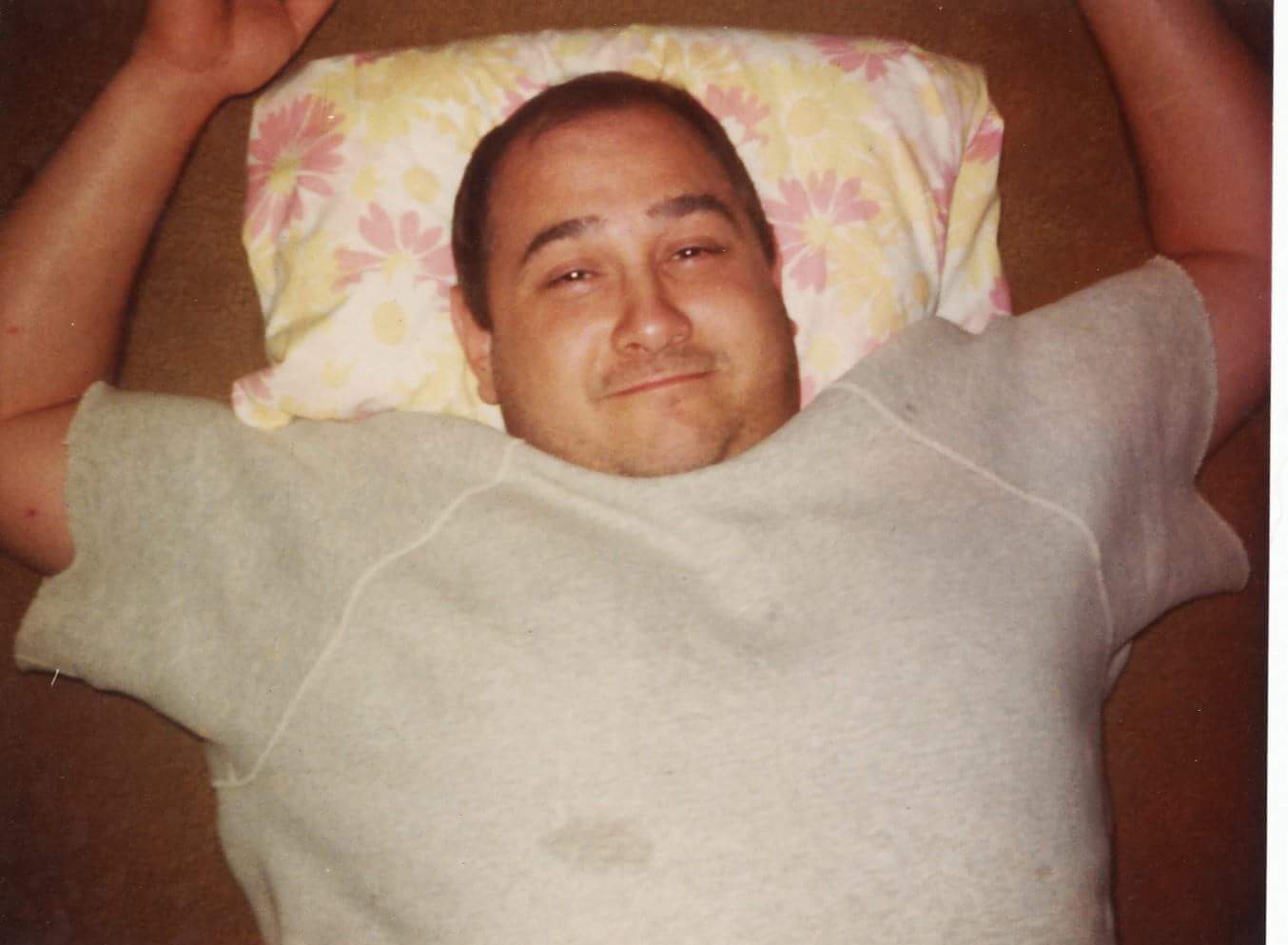
I’m given to understand from my mother that my father was a very gentle and loving man when he wasn’t drinking. He was overjoyed at my birth, and there are many photos of the two of us playing together when I was very young. His nickname for me was ‘Squeaky Bear’, and when we had mashed potatoes for dinner, he would walk his fingers through them to make me laugh.
I do not remember this, of course. All I have is photographs and what my mother told me about him. I have often wondered what sort of person I would be if I’d had my real father in my life, sober and happy. I can’t help but think that the numerous tragedies that have befallen me in my life at least might have been less likely to happen if I’d grown up in a real, happy family instead of a fake, dysfunctional one.
I can’t wish for things to have been different, though, because I’m mostly happy with my life the way it is now, and because of the progression of cause and effect, my life would not be what it is today without all of the previous events in my life, both good and bad. Having a happy and stable family would not have guaranteed a smooth, happy life for me.
If I have any wishes when it comes to the death of my father, it’s that the government get over the collective shame that comes with the suicide of military personnel and erect a monument to the self-fallen. It would be easy to create an extension of the Vietnam War Memorial in Washington DC to include the names of those who fell in internal warfare that other people may not have even been able to see. Battle-induced PTSD has been a known factor throughout the history of warfare, but one typically ignored out of the shame at being perceived as weak.
That is my vision. To dispel the unnecessary shame that surrounds suicide, see the erection of this monument, and to do what so many other of those who are the survivors of this war’s dead: take a charcoal rubbing of my father’s name, knowing that he will live forever etched in black granite, never to be forgotten.

Leave a Reply